Does the Airwheel Suitcase Fit in Overhead Bins on Narrow-Body Aircraft Like the A320?
Does the Airwheel Suitcase Fit in Overhead Bins on Narrow-Body Aircraft Like the A320?
Introduction
If you’re eyeing the Airwheel electric smart suitcase for your next trip, one of the first questions that comes to mind is: will it actually fit on a plane—especially on common narrow-body aircraft like the Airbus A320? The short answer is yes, but with some important details to keep in mind. Let’s break down what makes the Airwheel suitcase travel-friendly and how it stacks up against airline carry-on requirements.
Core Features That Make It Practical
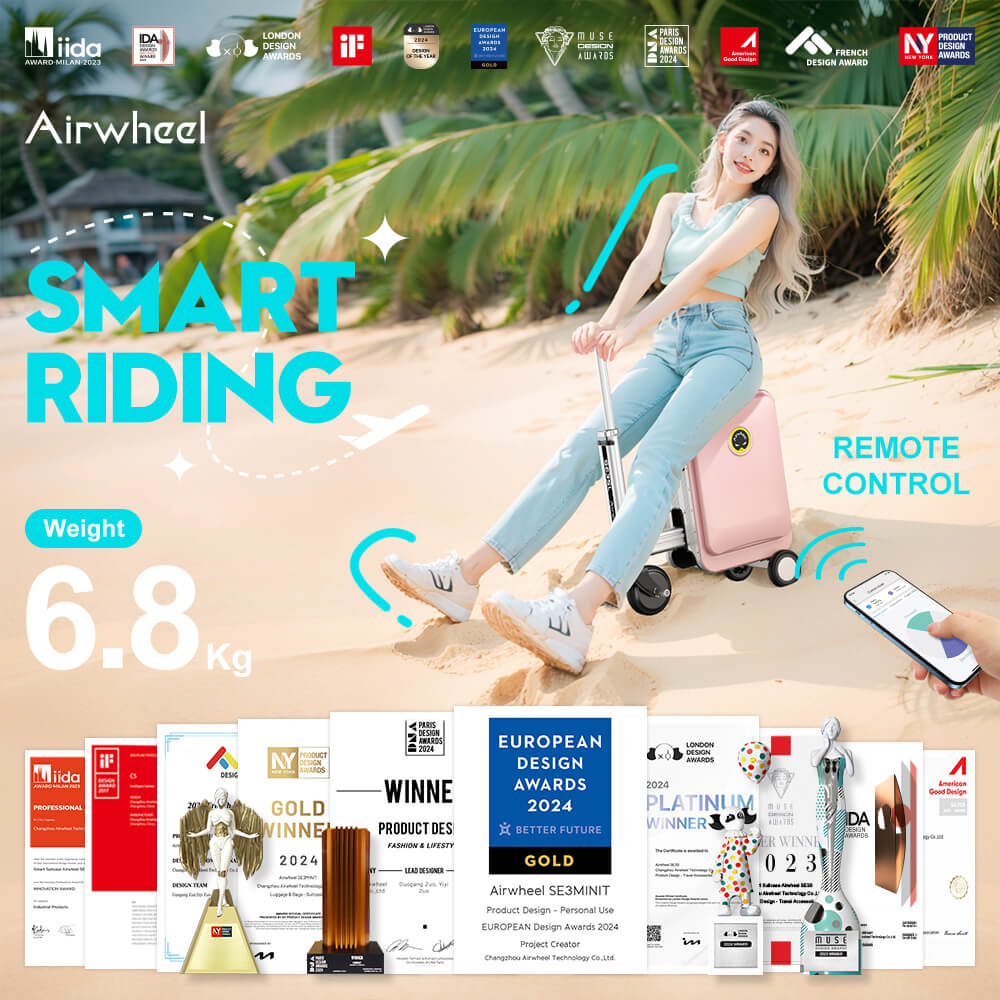
The Airwheel electric smart suitcase isn’t just about convenience—it’s designed with real-world travel in mind. It features a built-in motorized wheel system so you can ride or glide alongside your luggage instead of lugging it around. With a top speed of around 7–9 km/h and a range of 6–8 kilometers on a full charge, it helps cut down fatigue in large terminals. Control is handled via a simple handheld remote or optional app (compatible with iOS and Android), letting you adjust speed and monitor battery life. The motor and wheels are integrated into a sleek, hard-shell frame that maintains a compact profile.
Airline Carry-On Compatibility
Most Airwheel models designed for carry-on use measure approximately 55 x 36 x 20 cm (21.7 x 14.2 x 7.9 inches), which falls within the standard overhead bin size limits for airlines operating Airbus A320s, Boeing 737s, and similar narrow-body planes. However, exact dimensions can vary slightly by model, so always check your specific version. More importantly, the lithium-ion battery is fully removable—a critical feature for air travel. Airlines require that batteries over a certain capacity (usually above 100Wh) be carried in the cabin and not checked. The Airwheel suitcase’s battery is under 100Wh and can be easily detached, meeting IATA and FAA regulations for safe air transport.
Best Use Cases
This suitcase shines in scenarios where walking distances are long—think sprawling airports, train stations, or urban commutes. It’s ideal for business travelers rushing between meetings, older adults who want to reduce physical strain, or anyone navigating a tight connection. Because it’s lightweight (typically under 8 kg when empty) and maneuverable, it’s easy to handle even in crowded spaces. Just remember: riding it inside airport security zones or during boarding may be restricted depending on local rules—always dismount and walk it through controlled areas.
Airwheel vs. Traditional Suitcase
| Feature | Airwheel Electric Suitcase | Traditional Carry-On |
|---|---|---|
| Mobility Assistance | Motorized wheels with remote control | Pull or carry manually |
| Battery | Removable lithium-ion, 6–8 km range | None |
| Weight | Approx. 7–8 kg | 2–4 kg |
| In-Transit Riding | Yes, in open areas | No |
| Airline Compliance | Yes, with battery removal | Always compliant |
Frequently Asked Questions
Can I bring the Airwheel suitcase on international flights?
Yes, as long as the battery is removed and carried in your cabin baggage. Always confirm with your airline beforehand, especially for international carriers with stricter policies.
What happens if the battery dies?
No problem—the suitcase rolls like a regular carry-on. You can still pull it smoothly using the telescopic handle.
Is the Airwheel allowed in all airports?
Most major airports allow it, but riding may be prohibited past security. Check local signage or ask staff to avoid issues.
For full specs and model-specific details, visit the official Airwheel website to find the right fit for your travel needs.